
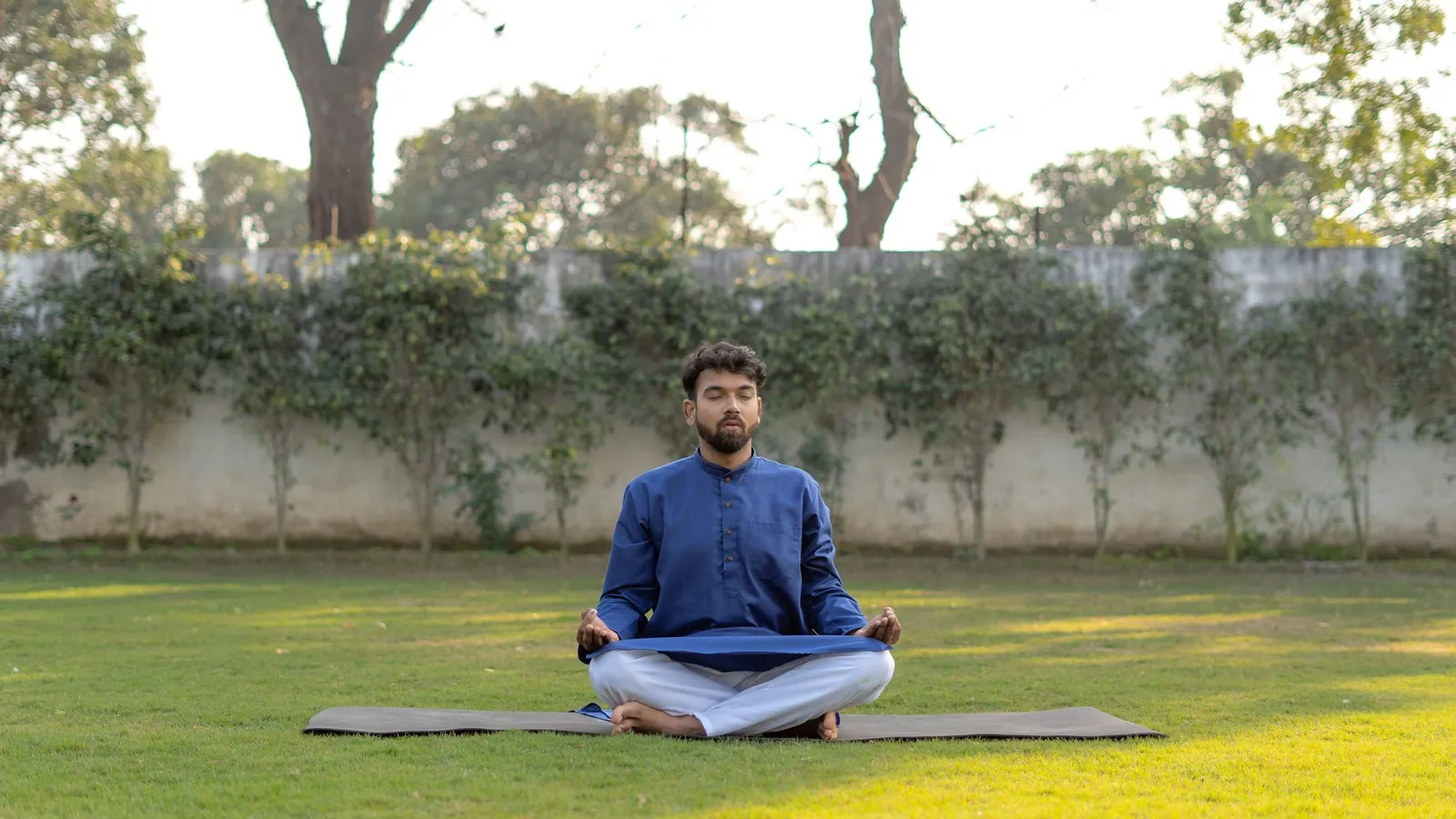
Spiritual evolution is not merely a passive state of quietude; it is an active, conscious transformation that elevates an individual from body-mind identification into universal soul consciousness.
As Senior Pyramid Master Anil explains in his advanced meditation guidance, the journey to end suffering, what Buddha articulated in the Eightfold Path, requires a complete alignment of daily living, selfless service (Seva), energetic hygiene, and karmic understanding. To walk this path is to shift from being an experiencer bound by earthly drama to becoming a quiet witness anchored in divine oneness.
This comprehensive guide explores the core pillars of spiritual evolution as outlined in the teaching session, detailing how practical meditation, food energetics, energetic protection, and karmic mechanics interlock to burn accumulated karma and reveal ultimate spiritual liberation.
1. The science of service: distinguishing physical seva from spiritual seva
Service, or Seva, is often considered the final test of spiritual maturity on the earthly plane. In spiritual traditions, an aspirant may meditate for decades and acquire vast intellectual knowledge, but until that wisdom is offered back to humanity without ego or expectation, complete realization remains unfulfilled. As highlighted in the guidance, astral masters evaluate a soul’s readiness for liberation based on whether they have given back what the universe has bestowed upon them.
However, all service is not created equal. The teaching delineates a fundamental distinction between physical service and spiritual service, highlighting how each impacts soul evolution differently.
Comparing dimensions of service
The table below contrasts physical and spiritual service across their primary operational levels, immediate outcomes, and long-term karmic effects:
| Service dimension | Physical seva | Spiritual seva |
|---|---|---|
| Primary level of action | Body, mind, and senses | Soul and higher consciousness |
| Concrete examples | Feeding the hungry, cleaning facilities, monetary aid, providing physical assets | Teaching meditation, sharing spiritual wisdom, aiding soul awakening |
| Immediate recipient outcome | Temporary physical comfort and relief | Mental clarity, inner peace, and spiritual self-reliance |
| Long-term impact | Recipient remains dependent (e.g., someone fed in the morning returns hungry the next day) | Recipient becomes independent of external dependence, transcending their own suffering |
| Karmic influence | Generates good physical karma (Punya) and favorable future lifestyle conditions | Neutralizes karmic baggage and opens the door to liberation (Moksha) |
While physical service, such as feeding the hungry, distributing assets, or maintaining community spaces, is noble and yields positive karmic seeds, it operates primarily within the temporal realm. By contrast, spiritual service equips individuals with the tools of self-realization. By teaching meditation and sharing truth, one frees others from perpetual dependency, making spiritual Seva the highest order of service available on the earthly plane.
Furthermore, authentic Seva must be performed under two unyielding spiritual conditions:
- Zero ego identification: Performing the action without feeling “I am the doer.”
- Zero outcome expectation: Relinquishing all desires for praise, recognition, or karmic return.
2. Navigating meditation: shifting from the experiencer to the pure witness
A common obstacle for meditators is the obsession with visual, auditory, or energetic phenomena during practice. Aspirants frequently query why some individuals experience vivid colors, third-eye visions, or astral travel while others encounter only quiet stillness.
As emphasized by Senior Pyramid Master Anil, analyzing meditation experiences creates a subtle trap for the mind.
Why experiences should never be analyzed
The teaching highlights three specific categories of experience that should never be subjected to intellectual analysis:
- Meditation experiences: Visions, colors, energy movements, or subtle sounds.
- Daily life dramas: Emotional fluctuations, interpersonal conflicts, and worldly events.
- Dream states: Subconscious scenarios and sleep experiences.
Analyzing these phenomena empowers the mind, expanding the false identity (the experiencer) precisely when meditation aims to quiet the mind into the zero-thought state. The one who experiences visions is the mind; the true identity is the silent witness observing the mind.
The Structural Shift in Consciousness:
- The silent witness (true soul consciousness): Observes all internal and external phenomena without attachment or judgment.
- The experiencer (false mind identity): Identifies with meditation visions, daily life dramas, and dream states, thereby strengthening the ego.
Past-life momentum and the experience of stillness
When meditators experience profound stillness without visual phenomena, it indicates high soul maturity. If an individual has traversed beginner meditation phases in past lifetimes, experiencing visions, subtle sensations, and astral phenomena, they resume their journey in this lifetime at a higher threshold. They bypass preliminary mental sensory phenomena and move directly into the void of stillness. Stillness is not an absence of progress; it is the ultimate state of soul presence beyond the restless mind.
3. Acceleration through pyramids and high-energy locations
During spiritual growth, practitioners often inquire whether meditating in high-vibration places, such as pyramids, sacred mountains like Mount Shasta, or spiritual centers like Cosmic Valley, genuinely speeds up soul progress.
The teaching clarifies that while an enlightened master experiences divine oneness anywhere, high-energy locations serve as powerful accelerators for practitioners who are still transitioning out of body-mind consciousness.
Why external energy tools matter for beginners
- Accelerated progression: Meditating under a pyramid or in high-frequency environments can compress what would ordinarily be a six-month developmental journey into a single month.
- Overcoming mind resistance: When a meditator is still identified with the body and mind, the mind resists quietude. High electromagnetic and cosmic energy frequencies help break through mental chatter, facilitating rapid entry into deep meditative states.
- The ultimate goal: Leveraging tools like pyramids accelerates early progress, but the ultimate aim is to realize that true awareness is independent of time, location, or external conditions.
4. Practical energetic protection: a 3-tier framework for meditators
As individuals engage in daily meditation, their subtle energy fields become increasingly sensitive. Entering environments with heavy, negative, or chaotic electromagnetic frequencies can disturb a meditator’s emotional and physical state. To navigate these environments safely, the session outlines a three-tier protection framework calibrated to a practitioner’s stage of growth.
The 3-tier protection model
The table below breaks down energetic protection strategies across different stages of spiritual evolution:
| Practice level | Protection strategy | Implementation technique | Primary goal |
|---|---|---|---|
| Beginner | Aura Locking & Light Shields | Issue intent command to close aura to all except the Higher Self; visualize white or golden protective light balloons; use spirit guide support | Prevents unwanted energy exchange in low-vibration environments |
| Intermediate | Transmutational Fire & Sound | Utilize Violet Fire visualization, decibel sound, and mantra chanting | Cleanses surrounding atmosphere and transmutes dense karmic vibrations |
| Advanced | Divine Oneness & Truth Vibration | Radiate high-frequency inner truth; maintain continuous witness state | Renders external energies completely incapable of disturbing the inner self |
Step-by-step aura locking protocol for beginners
For practitioners entering unknown or dense social settings, applying an energetic aura lock before arrival prevents energy depletion:
- Pause and center: Close your eyes for 15 to 20 seconds before entering the environment.
- Issue intent command: Mentally declare: “I lock my aura to all external energies, opening only to my Higher Self.”
- Visualize the shield: Picture a luminous white or golden sphere of light encapsulating your physical and subtle bodies.
- Post-exposure cleansing: Upon returning home, take a warm salt-water bath to dissolve any subtle residues picked up by the aura, or sit in a dedicated pyramid meditation space.
As a meditator matures into Divine Oneness, external protection techniques naturally fall away. When inner awareness realizes that the internal state governs outer reality, no external condition can alter the inner bliss.
5. Food energetics and mind discipline: nourishing the meditative state
Food is direct energy that influences the mind’s subtle qualities (Gunas). A disturbed mind cannot enter deep meditation, making dietary mindfulness essential for spiritual aspirants.
The impact of dietary qualities (gunas)
The session categorizes foods based on their energetic impact on spiritual practice:
- Sattvic foods (purity & harmony): Fresh leafy greens, sprouts, fresh fruits, nuts, and clean water. These foods calm the mind, lighten the body, and facilitate rapid entry into high-frequency meditative states.
- Rajasic foods (agitation & passion): Garlic, onions, excessive spices, and underground tubers (potatoes, root vegetables).
- The garlic warning: Garlic is strictly advised against for spiritual aspirants seeking states beyond body-mind consciousness. While garlic may possess physical medicinal properties, its energetic frequency agitates the mind (Rajas), forcing awareness outward and blocking deep stillness.
- Tamasic foods (lethargy & inertia): Stale food, meals stored in refrigerators for extended periods, microwaved food, and heavy overeating. Tamasic energy induces laziness, brain fog, and procrastination, destroying meditative focus.
Mindful eating practices and the Ayurvedic stomach division
To optimize energy absorption, the session highlights the classic Ayurvedic rule for stomach volume division during meals:
- Two portions (50%): Reserved for solid Sattvic food.
- One portion (25%): Reserved for pure water or liquids.
- One portion (25%): Kept entirely empty for Pranic energy circulation.
When traveling or eating outside, where food preparation conditions are unknown, practitioners should express deep gratitude, bless the meal with light, and opt for simple salads or menu-ordered dishes rather than open buffets exposed to chaotic ambient energies.
6. The mechanics of karma: Prarabdha, Sanchita, and Agami
Understanding karma is essential to ending the cycle of suffering and rebirth. The guidance breaks down the three operational layers of karma and explains how meditation and spiritual wisdom (Jnana) burn accumulated baggage.
Operational layers of karma
| Karma type | Definition & origin | Percentage impact on present life | Method of transcending |
|---|---|---|---|
| Prarabdha Karma | The active allotment of karma selected for the current lifetime | 90% – 95% (derived primarily from the immediate previous lifetime) | Experienced as life lessons; neutralized through meditation and non-reactive acceptance |
| Sanchita Karma | The vast accumulated warehouse of all past lifetime karmas | Stored in causal reserve (5%–10% active influence) | Burned away rapidly through deep meditation and self-realization |
| Agami Karma | New karma being generated through present thoughts and actions | Continuously accumulating for future lives | Prevented by acting without ego identification or outcome expectation |
How meditation and knowledge burn karmic baggage
Good deeds (Punya) yield pleasant future circumstances, while bad deeds (Papa) produce challenging lessons. However, creating good karma does not free a soul from the birth-death cycle; it merely exchanges iron chains for golden ones.
To completely transcend karmic laws, one must burn the seeds of karma through spiritual knowledge (Jnana) and meditation.
“You do not transcend karma by creating more karma. You transcend karma by burning it with the fire of spiritual wisdom and meditation.”
Senior Pyramid Master Anil
When a practitioner meditates regularly:
- Prarabdha Karma neutralization: Life lessons are processed swiftly as neutral learning experiences without emotional trauma.
- Sanchita Karma unlocking: The stored baggage (Sanchita) is brought forward and incinerated in the high-frequency light of soul awareness.
- Agami Karma cessation: Acting as a non-attached witness prevents the creation of new karmic seeds (Agami).
When an individual establishes total self-realization, realizing “I am not this body, mind, or ego; I am the universal soul”, karma ceases to apply. Karma exists only for the body and mind; the soul remains eternally free.
7. Dissolving boundaries: Karmaboomi vs. Bogaboomi
In traditional Vedic culture, geographical regions were classified based on their energetic characteristics, designating India as Karmaboomi (a land focused on ritualistic and karmic work) and Western regions like America as Bogaboomi (lands focused on physical enjoyment and material living).
The teaching clarifies how modern meditators should understand this distinction:
- Plane of energies: While different geographical planes carry distinct energetic frequencies, a meditator anchored in Divine Oneness is not limited by geography.
- Transcending environmental conditioning: Believing that one can only evolve in a specific country or setting is a mental conditioning. High energy can be received anywhere when an individual maintains an open, receptive state.
- Universal law: In the universe, there is ultimately only one law, Divine Oneness. When inner awareness transcends the mind, regional classifications lose their hold.
8. Harmonizing karmic duty and soul service
A frequent dilemma faced by meditators is balancing family obligations (Karmic Family) with universal service (Soul Family). As taught by Brahmarshi Pitamaha Patriji and reinforced in the guidance, abandoning family duties under the guise of spiritual work creates negative karmic backlash, while neglecting spiritual service stifles soul expansion.
The balanced weekly schedule
To maintain harmony between worldly responsibility and spiritual growth, practitioners are encouraged to follow a balanced framework:
- Monday through friday (karmic family focus): Dedicate full attention to family duties, professional responsibilities, and worldly relationships. Fulfilling these obligations prevents creating unpaid karmic debts.
- Weekends and free time (soul family focus): Dedicate available time to spiritual Seva, teaching meditation, spreading wisdom, and serving humanity.
By honoring worldly responsibilities during the week and serving the broader community on weekends, an individual fulfills their karmic design while accelerating soul ascension. When conflicts arise between duty and service, one must consult the inner heart, ensuring that duties are ethically managed while seizing opportunities to uplift humanity.
9. Actionable blueprint for daily spiritual practice
To synthesize Buddha’s path into daily living, integrate these core practices:
- Daily meditation without expectation: Sit regularly in quiet meditation, witnessing thoughts without seeking visions or energetic validation.
- Mindful sattvic diet: Emphasize fresh, plant-based greens and sprouts while avoiding garlic, tamasic leftovers, and overeating.
- Energetic hygiene: Lock your aura before entering chaotic environments and utilize salt-water baths to cleanse subtle energy channels.
- Selfless service: Share spiritual wisdom and meditation techniques to help others become spiritually self-reliant.
- Witness consciousness: Remind yourself throughout daily activities: “I am the silent witness, not the body or mind.”
Through meditation, disciplined diet, active Seva, and witness awareness, the momentum of karma dissolves, opening the doorway to lasting peace, realization, and Nirvana.
0 views