
The pursuit of excellence, whether in physical arts, intellectual domains, or spiritual practice, demands an uncompromising standard of engagement.
In his illuminating discourse on PMC Telugu, Brahmarshi Pitamaha Patriji articulates a foundational principle of human development: whatever endeavor an individual undertakes, it must be approached with total, one-hundred-percent commitment. Mediocrity and half-hearted attempts not only delay outer success but also obstruct the inner evolution of the soul.
By examining how total immersion operates across everyday disciplines such as music, athletics, and language acquisition, Brahmarshi Pitamaha Patriji bridges mundane activities with high spiritual science. He demonstrates that the discipline required to align with musical rhythm or master a sport is identical to the focus needed to quiet the mind and experience pure meditation.
1. The art of total dedication: lessons from music, sports, and languages
To understand the necessity of total commitment, one must look at how skills are acquired and perfected in the physical world. Brahmarshi Pitamaha Patriji highlights that mastery is never an accident; it is the direct outcome of wholehearted immersion.
The musical analogy: Sruti, Laya, and pitch
Consider the learning of classical music. When a student begins vocal or instrumental training, they must master the fundamental notes (Swaras), Sa, Ri, Ga, Ma, Pa, Dha, Ni.
“When learning music, one must align perfectly with Sruti (the key or pitch) and Laya (the rhythm). If the breath, tone, and tempo are not given one hundred percent concentration, the music fails to harmonize and remains noise.”
Brahmarshi Pitamaha Patriji
If a singer practices with only fifty percent of their attention, their pitch wavers and their timing falters. Perfect harmony emerges only when the singer becomes completely one with the sound.
Athletics and skill acquisition
The same law applies to athletics. Whether playing cricket, football, or practicing gymnastics, an athlete cannot achieve excellence by engaging passively. A cricketer facing a fast delivery must give absolute focus to the ball’s movement, trajectory, and speed. A fraction of a second of distraction leads to failure. Absolute immersion transforms mechanical physical movement into fluid, instinctual mastery.
Language learning and expression
When acquiring new languages, be it Sanskrit, English, Tamil, or Kannada, partial effort leaves a person struggling with grammar and vocabulary, unable to communicate fluently. True fluency demands total immersion: listening, speaking, reading, and internalizing the nuance of the language until it flows effortlessly.
2. The dangers of half-hearted effort: mechanics of action and Karma
Why is partial commitment so detrimental? In spiritual science, action (Karma) and its result (Karma Phalam) are bound by the universal Law of Cause and Effect (Karya Karana Sambandham).
| Degree of effort | Operational quality | Resulting outcome | Spiritual & psychological impact |
|---|---|---|---|
| Half-hearted (10% – 50%) | Distracted, hesitant, unfocused | Incomplete results, repeated errors | Frustration, doubt, stagnated growth |
| Partial / conditional (60% – 90%) | Competent but restricted by expectation | Moderate success, lack of deep insight | Superficial achievement, attachment to outcome |
| Total immersion (100%) | Absolute presence, zero hesitation | Flawless execution, total transformation | True mastery, inner liberation, and bliss |
When an individual approaches a task with divided attention, the seed sown is weak, and the harvest is correspondingly meager. Brahmarshi Pitamaha Patriji emphasizes that complaining about poor outcomes while investing fragmented energy is an illusion born of ignorance. True accountability means recognizing that full results require full dedication.
3. Lifetime evolution: rebirth and the soul’s quest for mastery
In Pyramid Spiritual Science, life on Earth is understood as a grand cosmic university. The soul undergoes a continuous cycle of birth and rebirth (Janma Punarjanma) to experience, learn, and master diverse dimensions of existence.
- The soul as an eternal student: Each life incarnation presents specific lessons, roles, and challenges designed to expand consciousness.
- The accumulation of wisdom: Skills and spiritual insights cultivated with total commitment in one lifetime carry forward as subtle samskaras (tendencies and wisdom) into subsequent births.
- Transcending animal instincts: As consciousness evolves from basic survival drives (Pashutvam) to divine self-awareness (Madhavatvam), the soul learns that total dedication in action is what unlocks its inherent divine potential.
4. Applying 100% focus to pure meditation (Anapanasati)
If one hundred percent commitment is required for worldly skills, it is infinitely more vital for spiritual practice. Brahmarshi Pitamaha Patriji stresses that meditation (Dhyana) cannot be treated as a casual hobby or a transactional ritual.
The practice of Anapanasati
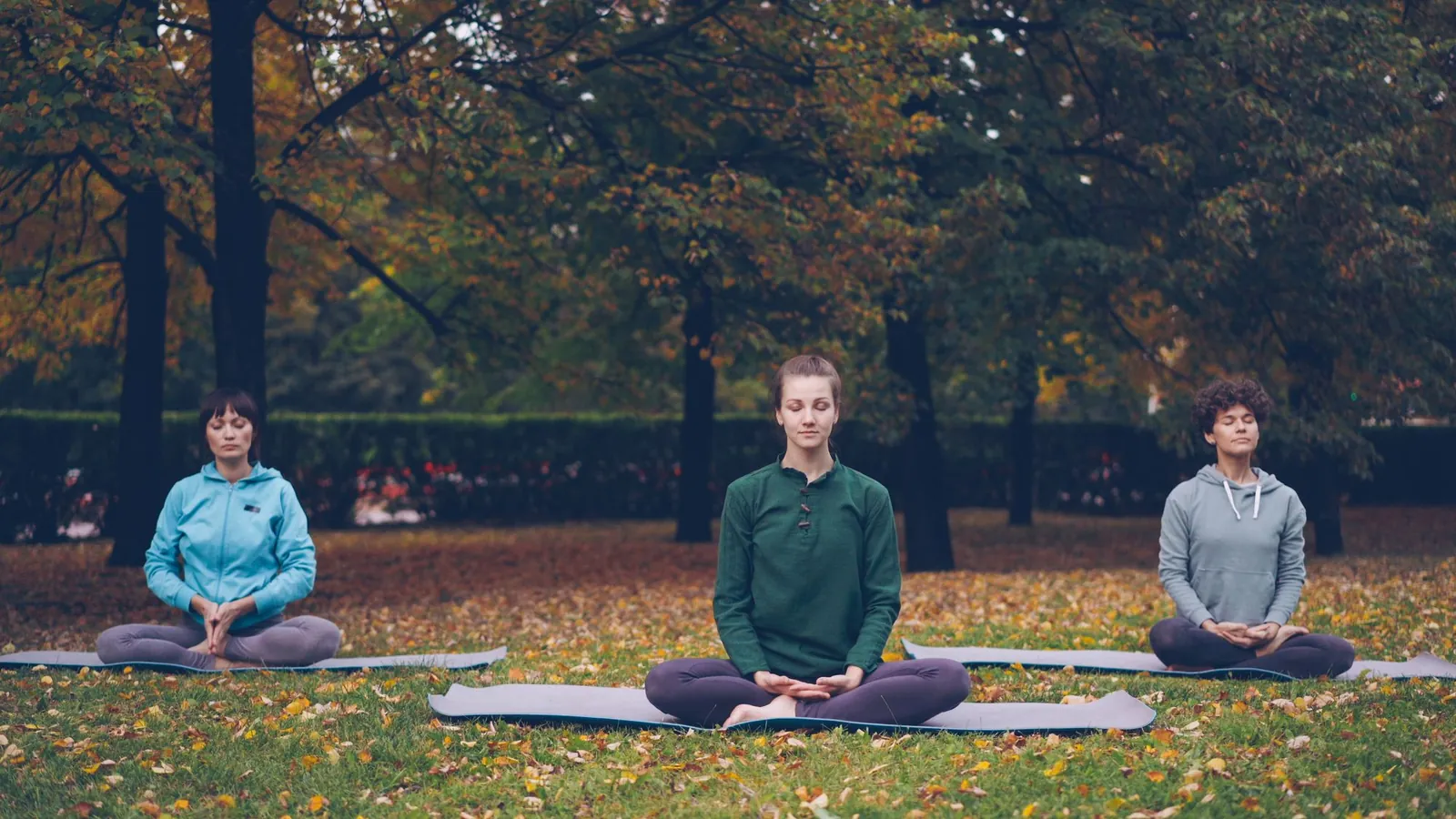
- Clasping hands and crossing legs: Sitting comfortably, crossing the feet, and interlocking the fingers to form a closed circuit of energy.
- Closing the eyes: Shutting the physical gates of perception to direct attention inward.
- Observing the natural breath: Gently observing the natural, soft, effortless inhalation and exhalation without chanting mantras or imagining forms.
- Complete mindful immersion: Giving one hundred percent of one’s awareness to the breath. Whenever thoughts arise, softly bringing the focus back to the breath without frustration.
“Meditation must be practiced purely for the sake of meditation, not for external rewards, favors, or guarantees. When you sit for meditation, give yourself one hundred percent to the breath.”
Brahmarshi Pitamaha Patriji
5. Key principles for daily life integration
Living a meditation-centered, high-mastery life requires applying this principle across every hour of the day. Brahmarshi Pitamaha Patriji summarizes this approach through actionable spiritual guidelines:
- Do what you do with 100% presence: Whether cooking, working, studying, playing music, or meditating, bring your entire awareness to the present moment.
- Abandon transactional expectations: Engage in work and meditation without bargaining for rewards. Work for the joy of creation, and meditate for the bliss of inner stillness.
- Embrace continuous practice: Understand that patience and consistent practice (Sadhana) build eternal spiritual wealth (Sahanam Dhanam).
- Share the wisdom: Once you experience the clarity of total commitment and pure meditation, teach and spread this practice to awaken others.
By replacing fragmented effort with total dedication, life ceases to be a struggle and transforms into an expression of joyful mastery and spiritual realization.
0 views