
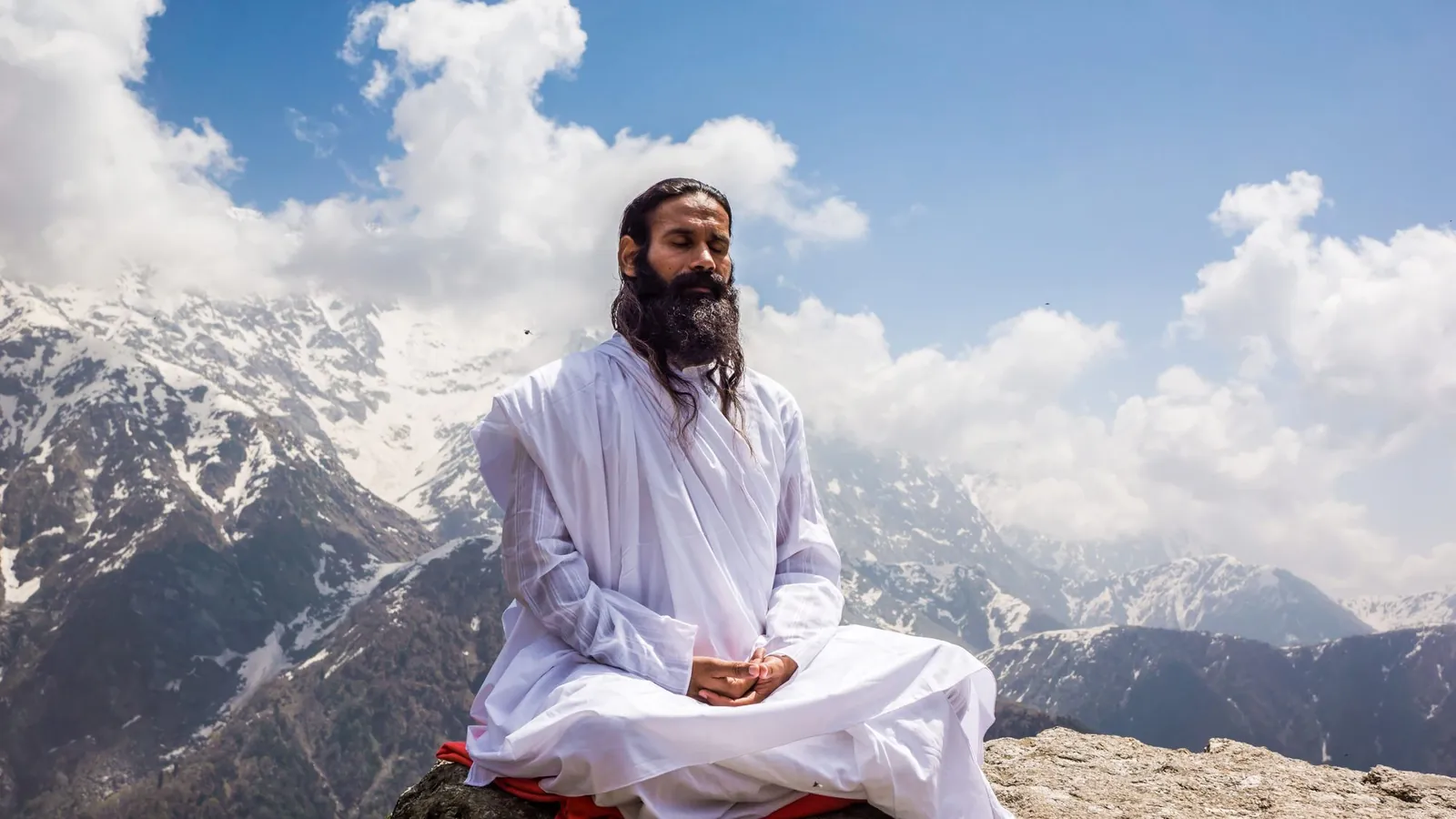
In the modern world, humanity has made staggering advancements across specialized domains of knowledge.
From industrial technology and commercial management to advanced agricultural techniques and the fine arts, human intellect has dissected almost every external facet of existence. Yet, despite mastering these intricate disciplines, individuals frequently struggle with mental unrest, physical ailments, and existential confusion. In his profound discourse on Jeevana Shastram (The Science of Life), Brahmarshi Pitamaha Patriji asserts that while specialized fields teach us how to make a living, only spiritual science teaches us how to live. By understanding and applying this master discipline, every individual can unlock cosmic energy, achieve mental stillness, and realize their inherent divinity.
1. Defining Jeevana Shastram: the master discipline of existence
Human education is predominantly structured around domain-specific sciences designed to fulfill material necessities and professional ambitions. While these fields are essential for societal functioning, they operate entirely within the physical and intellectual realms. Jeevana Shastram, or Spiritual Science (Atma Shastram), serves as the overarching umbrella under which all other sciences reside. It is the foundational study of human consciousness, inner energy dynamics, and cosmic truth.
Unlike academic subjects that rely solely on external experimentation, Jeevana Shastram is an experiential science. It requires looking inward to explore the nature of the self (Atma), the mind, and the subtle energy channels that sustain physical health. When an individual masters this supreme science, external pursuits naturally align with clarity, wisdom, and effortless balance.
2. Material sciences vs. the science of life: a comparative analysis
To appreciate the supreme position of Jeevana Shastram, one must examine how specialized disciplines compare to the science of living. Academic institutions grant degrees and doctorates in specific fields, training individuals to handle external tools, commercial systems, or physical phenomena. However, no conventional university offers a degree in managing one’s own thoughts, emotions, or cosmic energy flow.
The table below contrasts traditional domain sciences with the holistic scope of Jeevana Shastram as articulated by Brahmarshi Pitamaha Patriji:
| Field of study | Primary focus | Operational sphere | Ultimate outcome |
|---|---|---|---|
| Agricultural science (Vyavasaaya Shastram) | Cultivation, soil fertility, and crop yields | Physical environment & food production | Material sustenance and physical nourishment |
| Business & management (Vyapaara Shastram) | Commerce, trade systems, and financial growth | Economic structures and organizational management | Financial wealth and material prosperity |
| Fine arts & music (Sangeetha Shastram) | Acoustic harmony, rhythm, and artistic expression | Emotional expression and aesthetic sense | Cultural enrichment and mental relaxation |
| Physical & medical sciences | Organic chemistry, anatomy, and physical laws | Material matter and biological mechanisms | Technological progress and symptomatic treatment |
| Spiritual science (Jeevana Shastram) | Conscious breath, mental stillness, and soul-realization | Cosmic energy fields and inner consciousness | Permanent peace, self-healing, and enlightenment |
While a master of business administration understands market dynamics and a master of music commands acoustic harmony, a master of Jeevana Shastram commands the mind itself. Without the foundation of spiritual science, achievements in material fields remain vulnerable to stress, disease, and inner emptiness.
3. Historical seers as master spiritual scientists
Throughout human history, the most revered figures were not merely religious icons or philosophers; they were rigorous scientists of Jeevana Shastram. They dedicated their lives to experimenting with inner consciousness, discovering universal laws of energy, and sharing these empirical findings with humanity.
- Sage Vyasa and sage Valmiki: Through deep meditation and inner vision, Sage Vyasa authored the monumental epic Mahabharata, while Sage Valmiki composed the Ramayana. Their works were not mere literary fiction, but profound treatises detailing the psychological, ethical, and spiritual dynamics of human life.
- Gautam Buddha: Recognizing the impermanence of worldly royalty and material luxury, Prince Siddhartha renounced his throne to investigate the root cause of human suffering. Through relentless inner exploration, he rediscovered Anapanasati (mindful breath observation) and established the Ashtanga Marga (Eightfold Path), demonstrating that mental liberation is achievable through systematic inner discipline.
- Lord Krishna: In the Bhagavad Gita, Lord Krishna delivered the definitive text on spiritual science amidst the battlefield. He outlined the mastery of action (Karma Yoga), wisdom (Jnana Yoga), and meditation (Dhyana Yoga), teaching that true renunciation occurs within the mind while fulfilling one’s duty in the world.
- Jesus Christ, prophet Mohammed, and world masters: Great spiritual illuminators like Jesus Christ, Prophet Mohammed, Guru Nanak, and Bhagavan Mahavira each emphasized inner communion, contemplation, and devotion in their own traditions. Their teachings remind us that the kingdom of heaven and supreme peace reside within the quieted human heart.
In modern times, spiritual pioneers like Paramahamsa Yogananda, Swami Rama, and Brahmarshi Pitamaha Patriji have continued this legacy, demystifying ancient wisdom and presenting meditation as a universal, scientific practice accessible to all.
4. The practical mechanics of Anapanasati: quieting the mind
The core methodology of Jeevana Shastram is meditation (Dhyanam), defined by Maharshi Patanjali in the classic Yoga Sutras as Chitta Vritti Nirodha, the systematic cessation of all mental fluctuations and thought waves. Brahmarshi Pitamaha Patriji emphasizes that true meditation does not involve chanting mantras, visualizing deities, practicing complex breathing control (Pranayama), or contemplating philosophical ideas. Instead, it relies on the simplest, most natural anchor: the natural breath.
The practice of Anapanasati (where Ana means Inbreath, Apana means Outbreath, and Sati means Being One With) is cultivated through specific physical and mental steps:
- Comfortable posture: Sit comfortably on the floor or a chair. Physical stability allows the body to relax completely so that physical sensations do not distract the mind.
- Clasping the fingers (Kalyana mudra): Cross your legs and interlock the fingers of both hands gently. Closing the physical circuit prevents subtle body energy from leaking outward.
- Closing the eyes: Gently close your eyes. Since a vast portion of mental activity is triggered by visual input, closing the eyes immediately turns sensory attention inward.
- Natural breath awareness: Observe the normal, natural, easy, soft, and gentle flow of the breath as it enters and leaves the nostrils. Do not force, hold, or count breaths. Whenever thoughts arise, gently detach from them and return attention to the natural rhythm of breathing.
- Duration rule (age in minutes): To achieve meaningful stillness, meditate for a duration equal to your current age in minutes (for instance, a 20-year-old meditates for 20 minutes, a 45-year-old for 45 minutes, and a 60-year-old for 60 minutes). Children can practice for shorter durations matching their age.
5. The four-stage chain of cosmic energy and self-healing
When an individual practices Anapanasati consistently, a profound bio-energetic transformation takes place. Brahmarshi Pitamaha Patriji details the exact four-stage sequence through which meditation translates into physical health, emotional equilibrium, and spiritual enlightenment:
- Stage 1: continuous breath awareness: Attending strictly to the natural breath anchors consciousness in the present moment, cutting off the continuous stream of past memories and future anxieties.
- Stage 2: thought cessation (Chitta Vritti Nirodha): As breath observation deepens, the frequency of mental thoughts slows down until the mind reaches total silence. In this state of mental emptiness, the intellect stops spending energy on redundant thinking.
- Stage 3: cosmic energy inflow (Vishwa Shakthi): When the mind is completely still, the gateway of the subtle body opens, allowing vast torrents of Cosmic Energy (Vishwa Shakthi) to pour into the human system. Cosmic energy is the universal life force that sustains all creation.
- Stage 4: subtle energy cleansing and healing: Cosmic energy flows through the body’s subtle energy channels (Nadis), dissolving energetic blockages, toxic stress, and karmic impurities. As the energy channels are restored to optimal vibration, physical ailments recede, physical vitality returns, and the third eye (Divya Chakshu) awakens to spiritual truth.
6. The three golden pillars for sustaining inner mastery
To ensure that spiritual progress is not temporary, Brahmarshi Pitamaha Patriji outlines three foundational pillars that every seeker must integrate into daily living:
- Regular meditation (Dhyanam): Daily individual and collective meditation practice to maintain energy levels, quiet the mind, and absorb cosmic force.
- Sacred study (Swadhyaya): Reading authentic spiritual literature written by enlightened masters who have directly experienced cosmic reality. Key masterworks recommended by Brahmarshi Pitamaha Patriji include:
- Autobiography of a Yogi by Paramahamsa Yogananda
- Living with the Himalayan Masters by Swami Rama
- Jonathan Livingston Seagull by Richard Bach
- Hands of Light by Barbara Ann Brennan
- The Third Eye by Lobsang Rampa
- Spiritual fellowship (Satsang): Engaging in discussion and sharing meditative experiences with fellow practitioners. Satsang reinforces positive spiritual momentum, eliminates doubts, and fosters a supportive environment for personal growth.
7. Conclusion: embracing practical spiritual science in daily life
Jeevana Shastram is not an abstract philosophy reserved for ascetics in distant caves; it is a practical, scientific lifestyle for everyday householders. By dedicating time each day to Anapanasati breath meditation, engaging in regular spiritual study, and surrounding oneself with noble company, any person can transcend physical limitations, eliminate disease, and live in perpetual joy and fearless awareness.
The journey of self-realization begins with a single conscious breath. As you sit in quiet observation today, remember that you hold the key to the ultimate science of life within yourself.
0 views