
Spirituality is often misunderstood as a domain of dogmatic beliefs, ritualistic routines, or abstract faith.
However, Brahmarshi Pitamaha Patriji, founder of the Pyramid Spiritual Societies Movement (PSSM), redefines spiritual exploration as a precise, empirical science, Spiritual Science (Aadhyatma Sastram). Just as physical sciences like physics, chemistry, botany, and zoology examine the mechanics of the material universe, Spiritual Science systematically investigates the unseen architecture of existence: consciousness, karma, soul evolution, and the multi-dimensional nature of reality.
At the core of Brahmarshi Pitamaha Patriji’s teachings lies a profound invitation: to perceive the universe not with mundane, superficial sight, but with spiritual vision (Ascharyavat), to truly behold the endless wonders of creation. To guide seekers from ignorance to direct experiential perception, Brahmarshi Pitamaha Patriji articulates Six Foundational Principles of Spiritual Science. This comprehensive blog post explores these six principles in detail, enriched with practical examples, ancient scriptural insights, and actionable meditation practices.
1. Atma siddhantam: realizing the eternal soul consciousness
The first and most foundational pillar of Spiritual Science is Atma Siddhantam, the Principle of Soul Consciousness. Physical science examines atoms, molecules, and biological organisms. Spiritual Science reveals that underlying all material forms is the fundamental substance of universal consciousness. We are not physical bodies possessing temporary spiritual experiences; we are eternal souls (Atma) inhabiting temporary physical vessels.
Brahmarshi Pitamaha Patriji categorizes humanity into two distinct states of awareness:
- The non-knower (agnyani): Identifies exclusively with the physical body, name, gender, socio-economic status, and sensory experiences. This state of ignorance leads to fear of death, existential anxiety, and attachment to transient material conditions.
- The knower (gnyani): Recognizes their true identity as the immortal soul, distinct from the physical container. The Knower understands that while the body undergoes birth, growth, decay, and death, the soul remains untouched and eternal.
To illustrate this truth, Brahmarshi Pitamaha Patriji references the timeless wisdom of the Bhagavad Gita (Chapter 2, Verse 20):
“Na jayate mriyate va kadacin nayam bhutva bhavita va na bhuyah | Ajo nityah sasvato’yam purano na hanyate hanyamane sarire ||”
Brahmarshi Pitamaha Patriji
“The soul is never born, nor does it ever die. It has not come into being, does not come into being, and will not come into being. It is unborn, eternal, ever-existing, and primeval. It is not slain when the body is slain.”
Just as an individual discards old, worn-out garments to put on new clothes, the soul discards aged physical bodies to enter fresh forms for continued learning. When one shifts identity from body-consciousness to soul-consciousness, fear evaporates, giving way to profound inner stability.
2. Janma punarjanma siddhantam: the journey of reincarnation
The second principle, Janma Punarjanma Siddhantam, governs the Law of Birth and Rebirth. Human life is not a single, isolated performance; it is a multi-chapter cosmic journey spanning hundreds of lifetimes. Reincarnation is the natural mechanism through which the soul gains diverse experiences, refines its understanding, and evolves from lower stages of awareness toward divine perfection.
In the Bhagavad Gita (Chapter 4, Verse 5), Lord Krishna illuminates this principle to Arjuna:
“Bahuni me vyatitani janmani tava carjuna | Tanyaham veda sarvani na tvam vettha parantapa ||”
Brahmarshi Pitamaha Patriji
“Many births have passed for me and for you, O Arjuna. I know them all, but you do not.”
The distinction between a master and a seeker is not the absence of past lives, but the clarity of soul memory. While the untrained mind forgets past incarnations due to the veil of bodily identification, a meditative master retains continuity of awareness across lifetimes.
A comparative look at consciousness evolution
The shift from body-bound survival to soul-awakened wisdom is outlined in the following comparative framework:
| Evolutionary stage | Identity & primary focus | Perspective on life events | Soul trajectory |
|---|---|---|---|
| Body-bound state (Pashutvam) | Physical survival, sensory indulgence, material hoarding | Views events as random accidents or external injustice | Slow, reactive cycles of karmic bondage |
| Soul-awakened state (Madhavatvam) | Inner awareness, spiritual wisdom, universal service | Views events as purposeful lessons and karmic balancing | Accelerated progression toward liberation (Mukti) |
Recognizing reincarnation eliminates the rush and anxiety of the ego. A seeker understands that every skill cultivated, every virtue mastered, and every spiritual truth realized is permanently etched into soul consciousness, carried forward into future incarnations.
3. Karma & Karma phala siddhantam: the immutable law of cause and effect
The third principle is Karma and Karma Phala Siddhantam, the cosmic Law of Cause and Effect. Every thought, word, and action generates a corresponding energetic seed that inevitably bears fruit (Karma Phala). The universe functions as a flawless mirror, returning to every individual precisely what they project into existence.
Brahmarshi Pitamaha Patriji summarizes this law in the concise Sanskrit maxims:
- Yad Bhavam Tad Bhavati: As your inner intention and feeling are, so your reality becomes.
- Yatha Karma Tatha Phalam: As the action is, so is the reaction and result.
There are no coincidences, accidental tragedies, or arbitrary favors in the cosmic order. Suffering is not a divine punishment, nor is good fortune an unearned favor. Pain merely signals an imbalance or an unlearned lesson from past actions. Conversely, wisdom and joy reflect righteous alignment with universal harmony.
Understanding the Law of Cause and Effect transforms one’s relationship with life. Instead of blaming external circumstances, other individuals, or fate, the spiritual seeker assumes total accountability for their reality, choosing conscious, compassionate actions that generate positive future outcomes.
4. Purogami siddhantam: continuous soul evolution and growth
The fourth principle, Purogami Siddhantam, asserts that the primary direction of creation is perpetual forward progress. Soul evolution is fundamentally upward; consciousness moves continuously from simpler forms toward higher complexity and expanded awareness.
In this evolutionary perspective, there is no true “failure” in the universe. What human beings label as failure is simply an indispensable learning experience, a stepping stone on the path to mastery.
Consider how mastery is achieved in human endeavors:
- Music & fine arts: A musician practicing scales (Swaras) encounters discordant notes and rhythm errors. These mistakes are not causes for quitting; they are diagnostic feedback guiding refinement until harmony (Shruti and Laya) is attained.
- Athletics & sports: A sportsman or athlete undergoes years of rigorous training, experiencing defeats and physical fatigue. Each setback builds endurance, strategy, and mental resilience.
- Language learning: A child learning a new language mispronounces words initially. Continuous practice transforms hesitant efforts into effortless fluency.
Similarly, spiritual evolution requires ongoing practice (Sadhana). Mistakes, trials, and challenges in daily life are cosmic recalibrations designed to strengthen the soul’s wisdom, patience, and love.
5. Yoga siddhantam: rapid evolution through Anapanasati meditation
While evolution occurs naturally over vast spans of time, the fifth principle, Yoga Siddhantam, reveals how a seeker can dramatically accelerate soul progress. Meditation (Yoga) is the master key that compresses lifetimes of spiritual evolution into a single incarnation.
In the Bhagavad Gita (Chapter 6, Verse 46), Krishna delivers a definitive directive:
“Tasmat Yogi Bhava Arjuna”
Brahmarshi Pitamaha Patriji
“Therefore, O Arjuna, become a Yogi!”
Brahmarshi Pitamaha Patriji advocates Anapanasati Meditation, an ancient, pure, and accessible breath-awareness technique. Ana means in-breath, Apana means out-breath, and Sati means being united with. Anapanasati involves softly, naturally, and continuously observing the normal, natural flow of the breath without any mantras, visualizations, or forceful breath manipulation.
The mechanics of accelerated evolution via Anapanasati
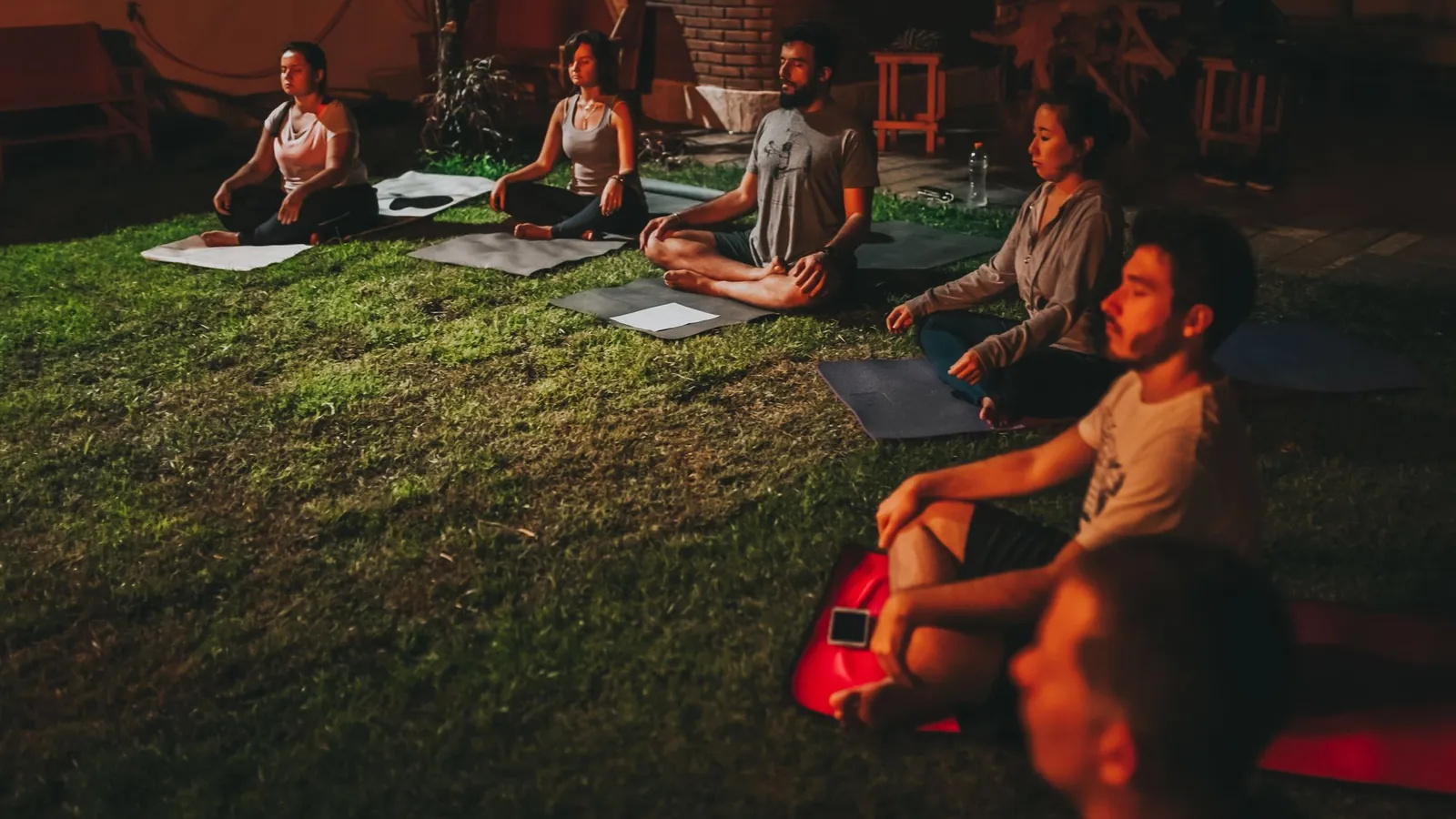
When a practitioner sits quietly, clasps their hands, crosses their legs, closes their eyes, and aligns their awareness with the gentle rhythm of natural breath, the following sequence unfolds:
- Cessation of mental agitation (Chitta Vritti Nirodha): Mind chatter quietens as attention rests purely on the breath.
- Inflow of cosmic energy: As the mind achieves stillness, vast streams of cosmic energy (Prana) flood the physical, subtle, and causal bodies.
- Clearing of subtle channels: High-frequency cosmic energy cleanses energy blockages (Nadis) and dissolves accumulated karmic impressions.
- Activation of third eye & higher perception: Inner vision awakens, allowing the seeker to perceive higher dimensions, subtle light, and spiritual truths firsthand.
Through regular Anapanasati practice, what might take several lifetimes of unguided living can be realized rapidly within years or months.
6. Anekanika siddhantam: unlocking the law of infinities and cosmic wonders
The sixth and culminating principle is Anekanika Siddhantam, the Law of Infinities. Creation is not a static or single-layered realm; it is an infinite, multi-dimensional expanse filled with limitless worlds, boundless forms of life, and unsearchable depths of wisdom.
In the Bhagavad Gita (Chapter 2, Verse 29), the awe-inspiring nature of the ultimate reality is described:
“Ascharyavat pasyati kascidenam ascharyavat vadati tathaiva canyah | Ascharyavacchainam anyah srnoti srutvapyenam veda na caiva kascit ||”
Brahmarshi Pitamaha Patriji
“Some look on the soul as amazing, some speak of it as amazing, and some hear of it as amazing, while others, even after hearing about it, cannot understand it at all.”
When a practitioner abides in soul consciousness (Atma Siddhantam), understands reincarnation (Janma Punarjanma), aligns with cause and effect (Karma), embraces forward growth (Purogami), and practices daily breath meditation (Yoga), their perception opens to Anekanika Siddhantam. They move beyond rigid, narrow worldviews and behold the universe as a magnificent tapestry of divine play (Lila).
The world ceases to be a place of boredom, routine, or suffering; it becomes an unending showcase of cosmic marvels. The beauty of nature, the intricate precision of physical laws, the diversity of living beings, and the profound depth of inner consciousness are all experienced with perpetual wonder (Ascharyam).
Conclusion & daily practice guidelines
Brahmarshi Pitamaha Patriji’s Six Principles of Spiritual Science offer a complete, scientific blueprint for human elevation. By integrating these principles into daily life, one transforms from a passive spectator into a conscious co-creator of a joyful, enlightened existence.
Daily spiritual action plan
- Daily Anapanasati meditation: Practice breath-awareness meditation daily for a duration corresponding to your age in minutes (e.g., 30 minutes for a 30-year-old). Sit comfortably, clasp your fingers, cross your ankles, close your eyes, and observe your natural breath.
- Cultivate vegetarianism (shakaharam): Respect all animal life by adopting a compassionate, plant-based diet, honoring the sanctity of all living beings.
- Engage in spiritual company (Sajjana Sangatyam): Surround yourself with fellow meditators and seekers to reinforce high-frequency awareness and mutual encouragement.
- Study spiritual literature (swadhyayam): Read authentic works of enlightened masters and spiritual science literature to continuously sharpen intellect and wisdom.
- Share meditation (Dhyana pracharam): Teach the practice of pure breath-awareness meditation to others, spreading light and peace across society.
Embrace these six principles, practice Anapanasati with 100% dedication, and step into the boundless wonder of cosmic consciousness!
0 views