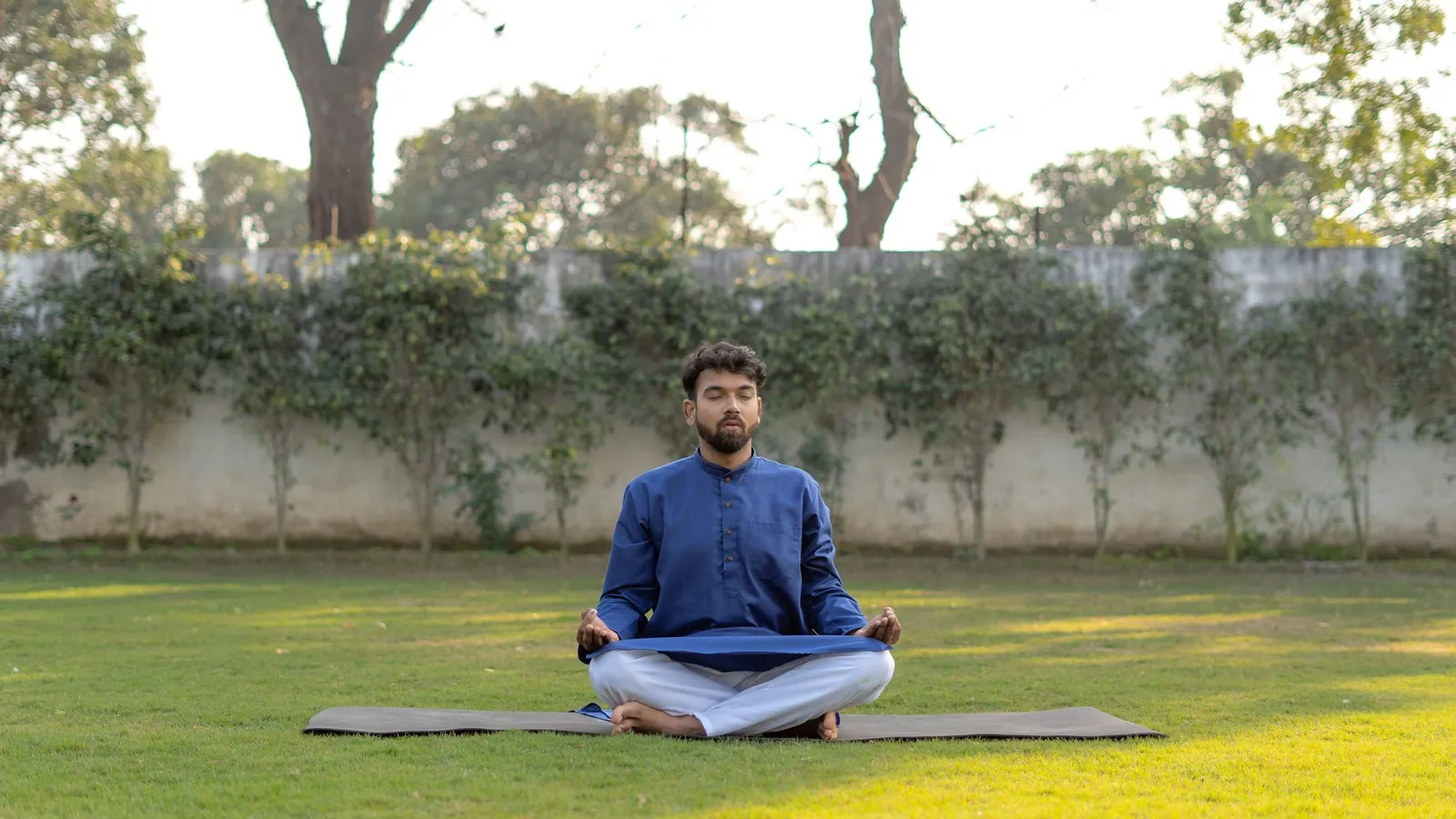

For centuries, spiritual seekers across cultures have embarked on arduous journeys in search of ultimate truth.
They have climbed sacred mountains, journeyed to ancient temples, accumulated esoteric knowledge, and engaged in elaborate rituals. Yet, a fundamental question remains at the core of human existence: Is truth something to be found in the outside world, or is it already present within us?
As illuminated in the teachings of Senior Pyramid Master Anil, the search for truth undergoes a profound transformation when one shifts from an outward direction (Bahirmukha) to an inward journey (Antarmukha Prayanam). Real spiritual progress begins when a seeker realizes that external places, high-energy environments, and physical rituals are merely temporary training wheels. The ultimate destination, Nirvana, Moksha, or Divine Oneness, is not a geographic location or a distant realm, but the unveiling of one’s own innate soul consciousness.
1. The great misdirection: why we look outside for what lies within
Human consciousness naturally begins in an external orientation. From birth, our senses are calibrated to perceive the physical environment, drawing our attention toward external objects, relationships, material achievements, and sensory pleasures. When a person first feels a spiritual calling, they inevitably apply this same outward mindset to their spiritual search. They seek high-energy locations, wait for spectacular visions, or rely entirely on external gurus and practices.
While high-energy places such as sacred mountains, ancient pyramids, or specialized meditation centers provide supportive electromagnetic frequencies that accelerate initial progress, they do not constitute truth itself. Seeking high-energy spots is like using a fast vehicle: it helps a beginner cover ground quickly by quieting the turbulent mind, but the growth itself remains strictly internal.
The following comparison illustrates how the seeker’s focus, validation, and ultimate outcomes shift when transitioning from external seeking to internal self-realization:
| Dimension of seeking | External orientation (bahirmukha) | Internal realization (antarmukha prayanam) |
|---|---|---|
| Primary focus | Sacred places, rituals, external forms, and physical sensory feedback | Silence of the breath, self-inquiry, and pure witness state (Sakshi Bhava) |
| Source of validation | Mystical visions, energetic sensations, and external approval | Unshakable inner peace, emotional stability, and expanded awareness |
| Relationship to mind | Conditioned by environmental variables and expectation | Transcending the mind to abide in zero-thought soul consciousness |
| Ultimate outcome | Temporary spiritual high dependent on external factors | Permanent liberation (Moksha / Nirvana) independent of circumstances |
True wisdom arises when the seeker moves beyond dependence on external conditions. When an individual abides in inner truth, their vibration elevates to a degree where external environments no longer disturb them; instead, their internal stillness radiates outward to transform the surrounding space.
2. The three levels of consciousness: body, mind, and soul
To understand where truth resides, one must map the inner landscape of human experience. Spiritual evolution is not an accumulation of external assets, but a systematic elevation through three distinct layers of consciousness.
The physical and sensory layer (Annamaya & Pranamaya)
At the initial stage, an individual identifies exclusively with the physical body and its immediate sensory environment. Life is governed by survival instincts, physical comforts, and instinctual reactions. Pain and pleasure are taken as absolute realities, and spiritual practice at this level consists largely of physical service or external rituals.
The mental and intellectual layer (Manomaya & Vijnanamaya)
As awareness expands, the seeker enters the domain of the mind and intellect. Here, thoughts, emotions, concepts, and subtle experiences take center stage. During meditation, a person at this level may experience colorful visions, hear subtle sounds, or feel energetic currents moving through the body. While these experiences mark progress away from gross physical fixation, they also present a dangerous trap: the mind often constructs elaborate illusions, tempting the practitioner to mistake intermediate mental phenomena for final enlightenment.
The pure soul consciousness (Anandamaya & Beyond)
Truth is realized only when consciousness transcends both body and mind to settle into the soul state, a condition of absolute stillness and zero thought. In this space of pure awareness, there are no visions, no physical sensations, and no analytical thoughts. There is only the timeless witness observing the play of creation.
3. Dissecting the trap of meditation experiences: experiencer vs. witness
One of the most subtle obstacles on the inward path is the temptation to analyze and attach importance to meditation experiences. Practitioners frequently ask why some people see visions of light or astral realms while others experience only quiet emptiness.
Master Anil highlights a crucial spiritual principle: the one who undergoes an experience is the mind (the false identity), whereas your true identity is the neutral witness watching the experience occur.
The hierarchical relationship between outer experiences, the mind, and the real self can be understood as follows:
- Outer world & visions: Transitory phenomena, sensory inputs, astral visions, or sleep dreams.
- The experiencer (mind & ego): The false identity that reacts to, analyzes, and claims ownership of experiences.
- The pure witness (soul / real self): The unmoving observer that remains completely detached and peaceful.
Analyzing meditation visions, dreams, or energetic sensations feeds the ego-mind, giving it power and pulling awareness back outward. Ancient wisdom traditions caution against three types of analysis:
- Analyzing meditation experiences: Obsessing over colors, geometric shapes, or astral phenomena seen during practice.
- Analyzing daily life scenarios: Getting caught in overthinking why specific worldly events occurred to the personal ego.
- Analyzing sleep dreams: Trying to decode every subtle projection of the subconscious mind.
When experiences occur during meditation, the correct approach is simply to observe them without judgment or attachment, letting them pass like clouds across the sky. If visions appear, recognize them as mental reflections; if stillness appears, rest in that stillness. The ultimate goal of meditation is not to accumulate subtle experiences, but to dissolve the mind into zero-thought soul awareness.
4. Energetic protection and dietary discipline: safeguards for the inward journey
Just as a tender sapling requires a protective fence until it grows into a sturdy tree, a developing meditator must protect their energy body and refine their dietary habits.
Practical aura protection protocols
When entering environments with low or chaotic energies, sensitive practitioners may absorb negative vibrations. Master Anil outlines a three-tier framework for energetic protection:
- Aura locking (beginner protocol): Before entering crowded or chaotic spaces, sit quietly for a few seconds, close your eyes, and set a clear conscious command to lock your aura to all external influences except your Higher Self. Alternatively, visualize a protective sphere of pure white or golden light enveloping your body.
- Energetic cleansing (intermediate protocol): Advanced practitioners use techniques such as invoking violet light or silently radiating meditative light to cleanse and transform negative spaces. Upon returning home from chaotic environments, taking a warm salt-water bath cleanses residual subtle energies from the aura.
- Divine oneness (advanced realization): For an enlightened master abiding in pure truth, explicit protection techniques become unnecessary. Recognizing that the entire universe is an expression of one divine consciousness, their internal high vibration naturally repels disharmony.
Food energetics and guna balance
Food directly impacts the mind’s clarity and stability. A disturbed mind cannot settle into deep meditation. Spiritual traditions emphasize a pure Satvik diet while avoiding foods that agitate or dull the mind:
- Satvik foods (promoting clarity and stillness): Fresh green leafy vegetables, sprouts, fresh fruits, nuts, and clean, mindfully prepared vegetarian meals. These supply refined pranic energy that settles the mind.
- Rajasik foods (triggering restlessness): Garlic, onions, and excessively spicy or pungent root vegetables stimulate outward mental activity (Rajoguna), making it difficult to achieve zero-thought stillness. Garlic, in particular, acts as a major hindrance for spiritual aspirants seeking deep meditative absorption.
- Tamasik foods (inducing lethargy): Stale food, microwaved meals, heavy buffets left open to chaotic external energies, and non-vegetarian items create mental heaviness (Tamoguna), leading to procrastination and dullness.
5. Harmonizing karmic duties with spiritual seva
A common misconception among spiritual seekers is that the inward journey requires abandoning daily life, family responsibilities, and worldly work. True spirituality, however, does not advocate escape; it demands perfect balance.
Master Anil explains that every human being has two distinct families and commitments:
- The karmic family: The physical family (spouse, children, parents) and social duties chosen as part of one’s birth design. Neglecting these duties out of spiritual escapism creates new karmic debts.
- The soul family: The global community of living beings to whom we owe selfless spiritual service (Seva).
A balanced spiritual life integrates both duties harmoniously:
- Karmic family duties: Fulfilling work, care, and family responsibilities with love, dedication, and integrity.
- Soul family seva: Devoting time, such as weekends and spare hours, to teaching meditation, sharing wisdom, and serving humanity.
Physical service (such as donating money or providing food) fulfills immediate physical needs, but the recipient will return hungry tomorrow. Spiritual service, such as teaching meditation, sharing wisdom, and helping others realize their own inner divinity, makes individuals permanently independent. Spiritual Seva is considered the highest form of penance, releasing deep-seated karmic baggage when performed without ego or expectation of reward.
6. Burning karmic baggage through inward realization
The human soul carries a vast repository of karma accumulated over hundreds of lifetimes. This karmic structure consists of three distinct categories:
- Sanchita Karma: The vast storehouse of all past accumulated karmic impressions held in the soul’s energetic memory.
- Prarabdha Karma: The specific portion of past karma selected for resolution in the present lifetime, shaping one’s birth, body, key life challenges, and primary relationships.
- Agami Karma: New karma created in the present lifetime through intentional actions, thoughts, and desires.
One cannot break the cycle of birth and death merely by attempting to offset bad karma with good deeds; good deeds lead to favorable future births, but keep the soul bound to the wheel of samsara.
The ultimate resolution lies in inward wisdom (Jnana). When a practitioner sits in daily meditation, quietens the mind, and realizes their identity as the immortal soul rather than the body-mind complex, the seeds of past karma are burned in the fire of self-awareness. Because karma attaches only to the ego-identity, reaching the state of Divine Oneness renders past karmic impressions powerless, bringing complete liberation.
7. Practical summary roadmap for the inward traveler
To integrate these profound principles into daily life, practitioners can follow this structured checklist for inward spiritual growth:
| Practice domain | Core principle | Daily actionable guidelines |
|---|---|---|
| Meditation practice | Cultivate the Witness State (Sakshi Bhava) | Practice daily breath-awareness (Anapanasati) without analyzing visions, dreams, or physical sensations. |
| Energetic hygiene | Protect and Cleanse the Aura | Lock your aura before entering chaotic places; use white/golden light visualizations; take salt-water baths after low-energy exposure. |
| Dietary discipline | Maintain Satvik Mental Balance | Emphasize fresh, leafy green vegetables; eliminate garlic and excessive spices; avoid stale or exposed buffet food. |
| Karmic balance | Fulfill Duties & Offer Seva | Dedicatedly serve your karmic family while devoting regular time to spiritual service (Seva) for humanity without ego. |
| Wisdom & self-inquiry | Burn Karma Through Realization | Regularly contemplate “Who am I?”, recognizing that you are the eternal soul, completely free from body-mind conditioning. |
The journey to truth does not require traveling to distant lands or accumulating complex external rituals. By turning inward, releasing attachments to sensory projections, maintaining daily meditative discipline, and living in selfless service, every seeker can unveil the eternal truth that has always lived within their own heart.
0 views