
In an era defined by rapid technological advancement and relentless daily activity, humanity often spends immense effort mastering specialized fields while overlooking the foundational discipline of existence itself.
In his seminal discourse (“Right Principles of Living”), Brahmarshi Pitamaha Patriji presents a compelling framework that establishes Spiritual Science (Jeevana Shastram or Atma Shastram) as the supreme master science. Drawing from ancient Vedic insights, classical yoga philosophy, and the lives of enlightened masters, Brahmarshi Pitamaha Patriji outlines practical, universal guidelines to cultivate mental stillness, absorb cosmic energy, and achieve self-realization.
1. The master discipline: spiritual science vs. specialized knowledge
Human society invests heavily in education across diverse professional domains. Universities award specialized degrees in business administration, agricultural science, financial management, physical sciences, and the fine arts. While these subjects enable individuals to navigate economic and material systems, they address only localized aspects of human endeavor.
Brahmarshi Pitamaha Patriji explains that beyond all specialized vocational disciplines lies the umbrella science: The Science of Living (Jeevana Shastram). Just as an agricultural scientist studies the principles of soil and crops, or a musician studies harmony and rhythm, a spiritual seeker studies the fundamental nature of consciousness, mind, and energy.
Historical figures across human history achieved extraordinary mastery in their respective fields because their work was anchored in an understanding of life science:
- Maharshi Vyasa and Maharshi Valmiki: Captured the deep psychological and cosmic truths of existence through epic literature such as the Mahabharata and Ramayana.
- Gautam Buddha and Jesus Christ: Renounced superficial status to investigate inner reality through direct meditation, leaving behind universal spiritual frameworks.
- Cultural and musical masters: World-renowned artists such as Ustad Bismillah Khan on the shehnai and Pandit Ravi Shankar on the sitar elevated their craft into a spiritual science through rigorous discipline and inner alignment.
| Knowledge dimension | Specialized worldly sciences | Spiritual science (Jeevana Shastram) |
|---|---|---|
| Primary focus | Outer environment, commerce, agriculture, technology | Inner consciousness, mind stillness, cosmic energy |
| Methodology | Academic study, empirical data collection, external tools | Direct self-observation, Anapanasati meditation, Swadhyaya |
| Ultimate goal | Material efficiency, economic livelihood, professional skill | Mental peace, physical health, liberation (Moksha), and self-realization |
Without grounding in Spiritual Science, professional achievements often fail to deliver lasting peace, emotional balance, or freedom from anxiety.
2. The core essence of meditation: Chitta Vritti Nirodha
At the center of right living is the daily practice of quieting the mind. Brahmarshi Pitamaha Patriji references Maharshi Patanjali’s foundational definition of yoga from the Yoga Sutras:
“Yogas Chitta Vritti Nirodha” (Yoga is the complete cessation of the fluctuations and turbulence of the mind.)
Yoga Sutras
Just as the physical body requires sleep every night to repair tissue and recover energy, the mind requires deliberate periods of conscious stillness. In ordinary waking states, the mind generates a continuous stream of thoughts, anxieties, and sensory processing. This ceaseless mental chatter drains vital energy reserves, leading to psychological fatigue and physical vulnerability.
Meditation is not an optional hobby reserved for ascetics; it is a fundamental biological and spiritual necessity for every human being. When thought activity is temporarily quieted, the mental turbulence subsides, allowing the individual to access deeper levels of awareness and vitality.
3. Practical mechanics of Anapanasati Dhyanam
To make spiritual practice accessible to everyone regardless of background, Brahmarshi Pitamaha Patriji advocates the pristine method of Anapanasati Dhyanam, taught originally by Gautam Buddha. The Pali term Anapanasati breaks down into three precise components:
- Ana: Natural incoming breath
- Pana: Natural outgoing breath
- Sati: Being combined or united with the breath
Step-by-step meditation protocol
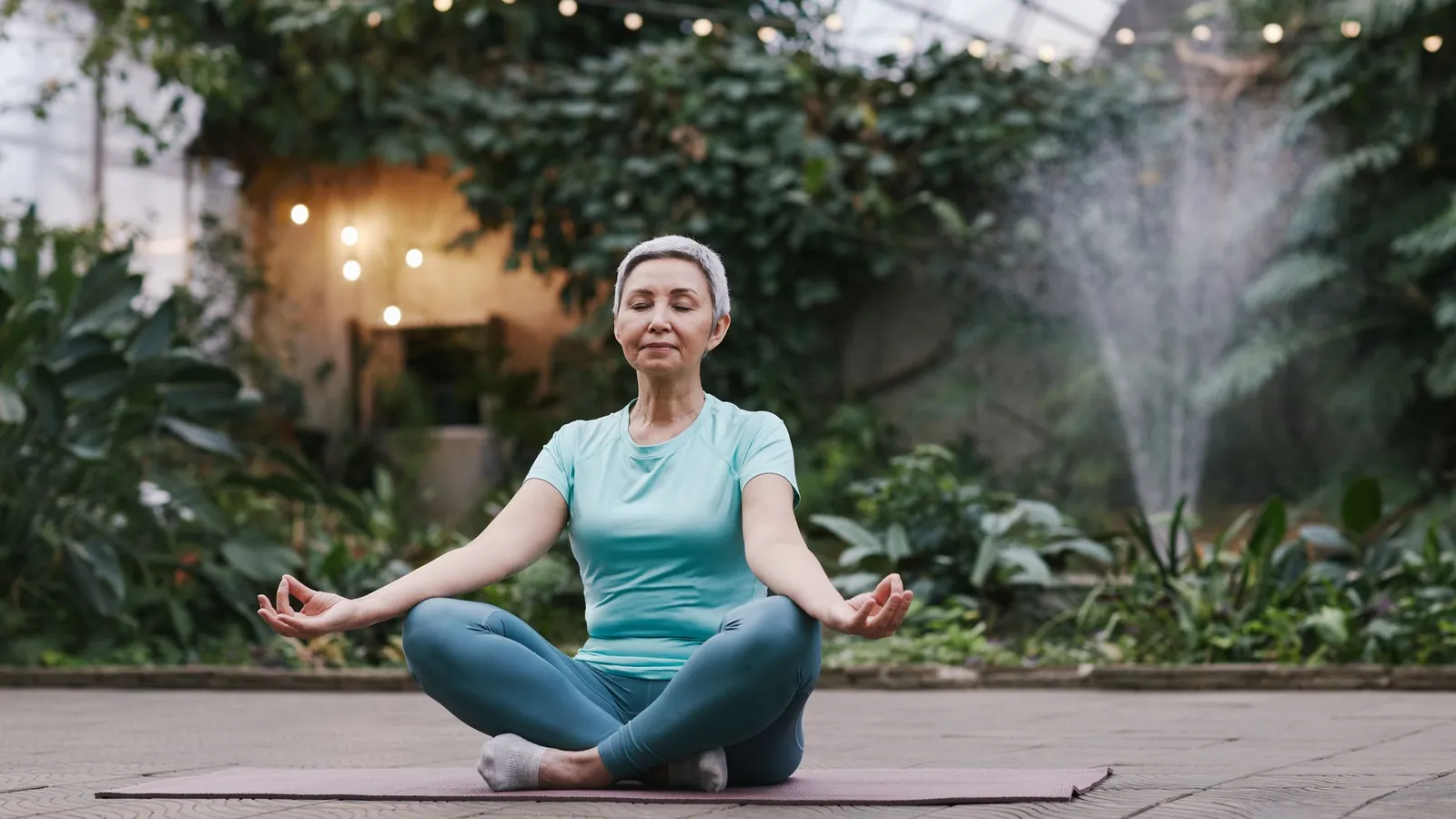
- Comfortable posture: Sit in a comfortable position, either on the floor with crossed legs or in a chair with ankles crossed. Physical stability prevents physical restlessness from distracting the mind.
- Clasping the hands: Interlock the fingers of both hands gently and rest them in the lap. Clasping the fingers and crossing the feet closes the body’s energy circuits, preventing energy leakage.
- Closing the eyes: Close both eyes completely. Since visual inputs consume a major portion of mental processing power, closing the eyes immediately turns awareness inward.
- Natural breath observation: Direct undivided attention solely to the natural, unforced flow of incoming and outgoing breath. Do not control, count, or alter the rhythm of breathing.
- Eliminating external distractions:
- No mantras: Do not chant any vocal or mental mantras.
- No visualizations: Do not visualize form, deities, or light.
- No complex pranayama: Avoid forceful breath retention (Kumbhaka) or artificial manipulation.
Daily practice duration rule
Brahmarshi Pitamaha Patriji provides a clear, quantitative guideline for daily meditation duration based on age:
- Children and youth: Practice minutes equal to age (e.g., a 10-year-old practices for 10 minutes).
- Adults: Practice minutes equal to age (e.g., a 40-year-old practices for at least 40 minutes daily).
- Advanced seekers & elders: Engage in longer sessions, including group meditation (Saha Dhyanam) lasting 1 to 3 hours.
4. The 4-stage cosmic energy chain
When Anapanasati Dhyanam is practiced correctly and consistently, it initiates a precise four-stage energetic transformation within the practitioner:
[Stage 1: Breath Observation] → [Stage 2: Mind Stillness] → [Stage 3: Cosmic Energy Inflow] → [Stage 4: Self-Realization & Healing]
- Breath observation (Swasa Anusandhanam): Focusing completely on the breath anchors the wandering attention to the present moment, cutting off the momentum of past regrets and future anxieties.
- Mind stillness (Chitta Vritti Nirodha): As thoughts subside, the mind achieves a state of zero-thought stillness (Nirmala Sthiti).
- Cosmic energy inflow (Vishwa Shakti Pravaaham): In the state of mental stillness, the subtle energy channels (Nadis) open. Infinite cosmic energy floods into the physical and subtle bodies, rejuvenating cellular health and clearing energetic blockages.
- Self-realization (Atma Gnanajyoti): Abundant cosmic energy awakens dormant spiritual wisdom, allowing the practitioner to experience their true identity as eternal consciousness rather than merely a physical body.
5. Essential spiritual masterworks and literature (Swadhyaya)
Alongside daily meditation, Brahmarshi Pitamaha Patriji highlights the vital role of Swadhyaya, the study of authentic spiritual literature written by realized masters. Reading spiritual classics provides intellectual clarity, corrects misconceptions, and inspires persistent practice.
Key literature recommended in Brahmarshi Pitamaha Patriji’s teachings includes:
- Autobiography of a Yogi by Paramahansa Yogananda: A transformative account detailing the reality of kriya yoga, immortal masters, and cosmic laws.
- Living with the Himalayan Masters by Swami Rama: An illuminating chronicle of spiritual discipline, yogic feats, and practical wisdom under Himalayan gurus.
- Jonathan Livingston Seagull by Richard Bach: An inspiring allegory exploring the limitless potential of the soul to transcend conventional limitations.
- Hands of Light by Barbara Ann Brennan: A comprehensive study on the human energy field, aura mechanics, and spiritual healing sciences.
- Thought Science by J. Krishnamurti: An incisive examination of the nature of human thought, conditioning, and psychological freedom.
- The Dohas of Sant Kabir: Timeless poetic couplets emphasizing urgency in practice, such as “Kaal Kare So Aaj Kar, Aaj Kare So Ab” (What you have to do tomorrow, do today; what you have to do today, do right now).
6. Transitioning from external rituals to internal realization
Traditional cultural customs often rely heavily on outward rituals, temple visits, vocal chanting (Stotras), and repetitive mantra recitation (Japam). While these practices can foster initial devotional sentiment, Brahmarshi Pitamaha Patriji emphasizes that they remain preliminary steps. Ultimate liberation and wellness require transitioning to direct internal meditation.
The three golden pillars of spiritual living
- Dhyanam (meditation): Daily practice of Anapanasati breath observation to quiet the mind and absorb cosmic energy.
- Ahimsa (non-violence): Practicing complete non-violence in thought, word, and deed, including adopting a strict vegetarian diet to live in harmony with all living beings.
- Satsang & Swadhyaya (spiritual fellowship & study): Surrounding oneself with fellow seekers and studying authentic spiritual texts to maintain continuous inspiration.
Conclusion: practice makes man perfect
Brahmarshi Pitamaha Patriji concludes his discourse with an enduring reminder: spiritual realization is not a matter of luck or passive inheritance, it is the direct result of regular, dedicated practice. Just as physical training builds bodily strength and regular study builds academic expertise, daily meditation refines human consciousness.
By dedicating time each day to sit quietly with the breath, eliminating mental noise, studying master literature, and living non-violently, every individual can transform their life into a radiant expression of health, peace, and truth.
0 views